
Business
Nigeria’s debt interest hits 124% above revenue
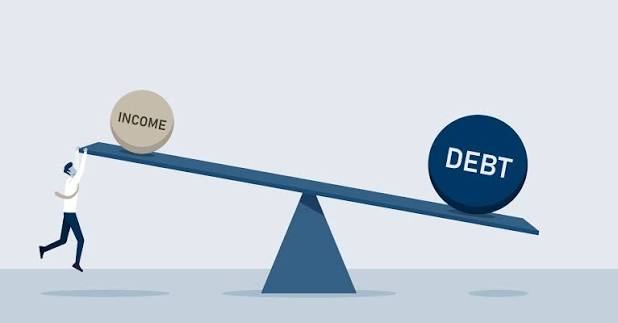
The Federal Government spent N7.7tn on interest payments in the first half of 2026, representing 124.2 per cent of its total revenue of N6.2tn during the period, World Bank revealed.
The figures according to Punch indicate that interest payments alone exceeded the government’s revenue by N1.5tn between January and June 2026, raising concerns about Nigeria’s debt burden despite improved revenue collections.
The findings were contained in the World Bank’s October 2026 Nigeria Development Update, titled Beyond the Federal Purse: How Higher Revenues Shaped State Priorities.
The report showed that interest payments increased by N2.1tn, or 37.5 per cent, from N5.6tn recorded in the corresponding period of 2025, largely due to elevated domestic borrowing costs.
The World Bank said, “Interest payments increased to 3.1 per cent of GDP (N7.7tn) from 2.5 per cent (N5.6tn) amid high domestic borrowing costs.”
An analysis of the figures showed that the interest-to-revenue ratio declined from approximately 155.6 per cent in the first half of 2025 to 124.2 per cent in the corresponding period of 2026, representing an improvement of 31.4 percentage points.
Despite the improvement, interest obligations continued to exceed the government’s total revenue, leaving limited resources for infrastructure, public services and other expenditure commitments.
According to the report, Federal Government revenue increased by N2.6tn, or 72.2 per cent, from N3.6tn in the first half of 2025 to N6.2tn in the corresponding period of 2026.
The World Bank stated, “Federal revenues rose to about 2.5 per cent of GDP (N6.2tn), from 1.6 per cent of GDP (N3.6tn) a year earlier, supported by a recovery in oil receipts, stronger corporate tax collections, and higher independent revenues, while customs revenues held stable and VAT collections stayed comparatively flat.”
However, the increase in revenue was accompanied by rising expenditure obligations, with total federal spending climbing from N14.6tn in the first half of 2025 to N16.1tn in the corresponding period of 2026, representing an increase of N1.5tn, or 10.3 per cent.
Personnel expenditure also rose from N3.7tn to N4.2tn following wage adjustments, while reported capital expenditure declined sharply. Capital spending fell from one per cent of GDP in the first half of 2025 to 0.3 per cent, equivalent to N700bn, in the corresponding period of 2026.
This means the Federal Government spent 11 times more on interest payments than on reported capital projects during the six-month period.
Combined interest and personnel expenditure amounted to N11.9tn, representing approximately 73.9 per cent of total federal expenditure and nearly twice the government’s revenue.
Despite the rising expenditure pressures, the World Bank reported an improvement in the Federal Government’s fiscal balance, with the deficit narrowing from N11tn, or five per cent of GDP, in the first half of 2025 to N9.9tn, or four per cent of GDP, in the corresponding period of 2026.
However, the institution cautioned that the improvement was partly driven by subdued capital expenditure rather than a significant reduction in recurrent obligations.
“The improved early-year fiscal outturn should be interpreted cautiously given the low reported federal capital spending,” the report stated.
It added, “Personnel and interest costs continue to absorb a large share of fiscal space, and a pickup in capital execution later in the year, alongside recurrent and pre-election spending, is expected to add to pressures.”
The World Bank also identified overlapping budget cycles, weak expenditure planning and poor alignment between approved allocations and implementation capacity as persistent challenges affecting fiscal management.
On the broader public debt position, the report estimated Nigeria’s debt stock at approximately N177tn in 2025, equivalent to 40 per cent of GDP, compared with N67tn, or 27.6 per cent of GDP, in 2021.
It explained that exchange-rate valuation effects and the recognition of previously accumulated liabilities, including securitised Ways and Means advances, contributed significantly to the increase.
The report noted that domestic debt accounted for 57.9 per cent of the country’s debt stock but generated 72.6 per cent of interest payments in 2025, reflecting the relatively high cost of domestic borrowing.
It recommended limiting expensive borrowing, prioritising concessional financing and extending debt maturities to reduce refinancing risks.
The World Bank further projected that Nigeria’s consolidated fiscal deficit would widen from 3.1 per cent of GDP in 2025 to 3.5 per cent in 2026, driven partly by rising federal interest, personnel and pre-election spending.
It urged the government to strengthen revenue mobilisation, improve budget credibility and maintain fiscal discipline to prevent debt obligations from further constraining development spending.
Author Profile

Latest entries
 FeaturesNovember 20, 2026For The Records: DELIVERING TODAY, ENERGIZING TOMORROW
 Metro/CrimeNovember 20, 2026Crisis: Fountain of Life Church announces Sunday service, denies being sealed
 NewsNovember 20, 2026‘Tinubu may win only two states in 2027’
 NewsNovember 20, 2026INEC under attack for refusing to register AAP

For The Records: DELIVERING TODAY, ENERGIZING TOMORROW

Crisis: Fountain of Life Church announces Sunday service, denies being sealed

‘Tinubu may win only two states in 2027’

APC dismisses Ikonne’s claim to Abia South Senatorial ticket

Governor Fubara hosts Adventist World Church President, pledges support for proposed South-south Union Conference

APC final list: Govs, heavyweight senators, others axed out
-
 News6 months ago
APC dismisses Ikonne’s claim to Abia South Senatorial ticket
-
 Events5 months ago
Governor Fubara hosts Adventist World Church President, pledges support for proposed South-south Union Conference
-
 Features5 months ago
APC final list: Govs, heavyweight senators, others axed out
-

 Events5 months ago
Tears, tributes as Abia government, Nollywood bid farewell to Alex Ekubo
-
 Metro/Crime6 months ago
Nigeria’s bleeding, declare nat’l security emergency – Northern elders tell Tinubu
-
 News5 months ago
2027 election: Court nullifies NDC registration
-

 Metro/Crime5 months ago
NYSC blacklists 3 LGAs Kebbi, to relocate orientation camp
-

 News1 month ago
Abia Governor, Otti flags off Abia Tertiary Education Sports Fiesta with Lighting of Torch of Unity