
Foreign
US to withdraw 200 troops from Nigeria after major ISIS operation
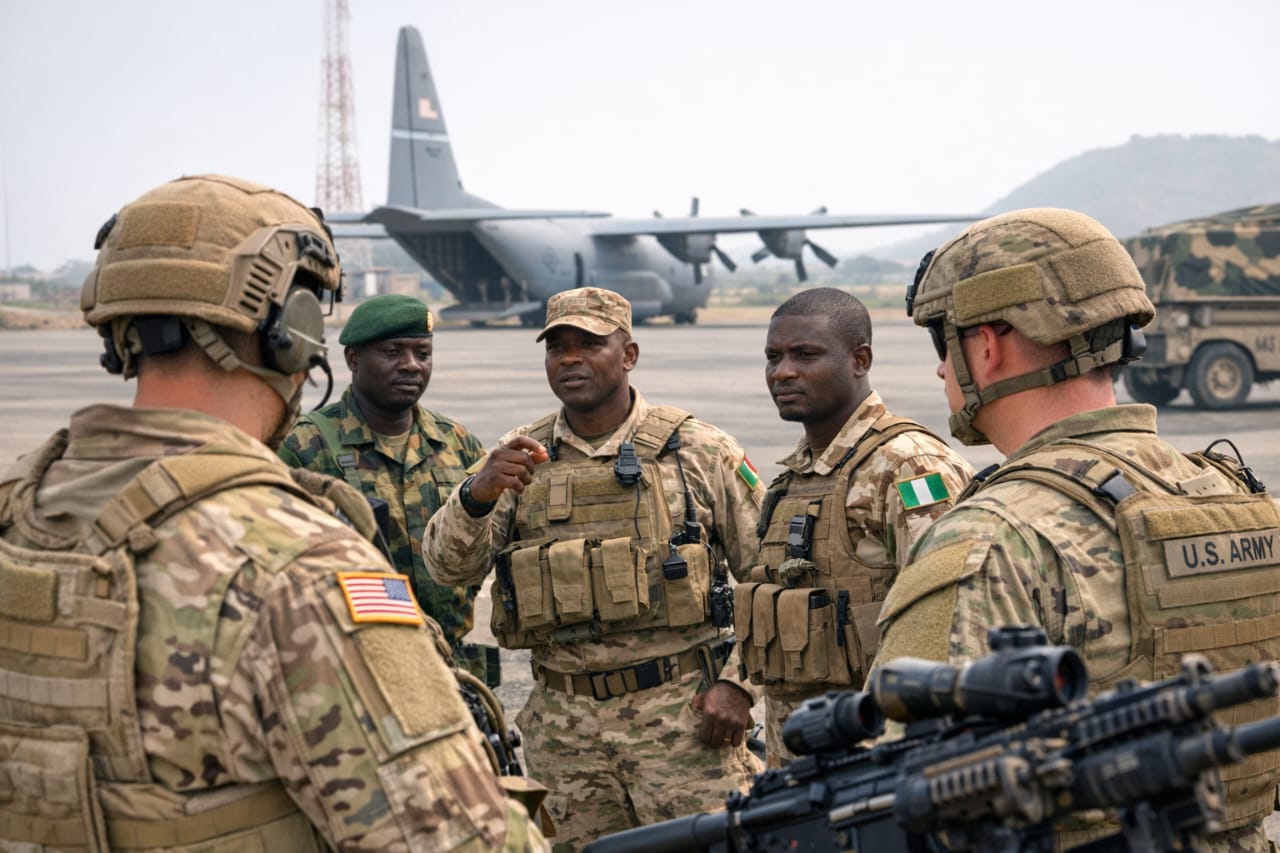
The United States is set to withdraw about 200 troops deployed to Nigeria for counterterrorism operations, with the larger contingent expected to leave by late September,2026, The New York Times reports.
American and Nigerian officials told the publication that the deployment, though relatively small, produced significant results in the fight against Islamist militants. Small teams of US trainers and intelligence analysts are expected to remain in Nigeria after the withdrawal.
The report said US officials regarded the Nigerian deployment as a potential model for future American counterterrorism operations in Africa, particularly because of the results achieved through a combination of military assistance, intelligence support and training.
Last month, US Africa Command commander, Gen. Dagvin Anderson, said the US had already withdrawn many of its troops following a May operation that killed Abu-Bilal al-Minuki, identified as the second-in-command of ISIS, in the Lake Chad Basin.
Anderson said the operation had significantly weakened ISIS’ leadership structure in Nigeria and internationally. He added that Nigeria had been “very active” since the operation, working to disrupt the terrorists’ ability to sustain themselves.
Despite the troop reduction, Anderson said the US would maintain its intelligence partnership with Nigeria, indicating that Washington’s security engagement with the country will continue through intelligence-sharing and other forms of cooperation.
The development comes weeks after Nigeria and the US held their second round of talks in Washington under a joint working group established to address the protection of Christian communities in Nigeria’s Middle Belt. The group followed President Donald Trump’s designation of Nigeria as a country of particular concern over allegations of Christian genocide, a position Nigeria has rejected.
Security challenges, however, extend beyond Islamist insurgency. Nigeria continues to contend with terrorism linked to the wider Sahel, banditry in the North-West, ISWAP, ISIS and Boko Haram attacks, farmer-herder conflicts, cult violence and militia activity.
Ladd Serwat, Africa senior analyst at ACLED, described the situation as “a very complicated security situation”, while noting that Islamist militant groups “constitute only a small proportion of the overall violence” in Nigeria.
Author Profile

Latest entries
 FeaturesNovember 20, 2026For The Records: DELIVERING TODAY, ENERGIZING TOMORROW
 Metro/CrimeNovember 20, 2026Crisis: Fountain of Life Church announces Sunday service, denies being sealed
 NewsNovember 20, 2026‘Tinubu may win only two states in 2027’
 NewsNovember 20, 2026INEC under attack for refusing to register AAP




For The Records: DELIVERING TODAY, ENERGIZING TOMORROW

Crisis: Fountain of Life Church announces Sunday service, denies being sealed

‘Tinubu may win only two states in 2027’

APC dismisses Ikonne’s claim to Abia South Senatorial ticket

Governor Fubara hosts Adventist World Church President, pledges support for proposed South-south Union Conference

APC final list: Govs, heavyweight senators, others axed out
-
 News6 months ago
APC dismisses Ikonne’s claim to Abia South Senatorial ticket
-
 Events5 months ago
Governor Fubara hosts Adventist World Church President, pledges support for proposed South-south Union Conference
-
 Features5 months ago
APC final list: Govs, heavyweight senators, others axed out
-

 Events5 months ago
Tears, tributes as Abia government, Nollywood bid farewell to Alex Ekubo
-
 Metro/Crime6 months ago
Nigeria’s bleeding, declare nat’l security emergency – Northern elders tell Tinubu
-
 News5 months ago
2027 election: Court nullifies NDC registration
-
 Metro/Crime5 months ago
NYSC blacklists 3 LGAs Kebbi, to relocate orientation camp
-
 News1 month ago
Abia Governor, Otti flags off Abia Tertiary Education Sports Fiesta with Lighting of Torch of Unity