
News
State Police: Abbas defends bill, says Govs can’t turn outfit into private army
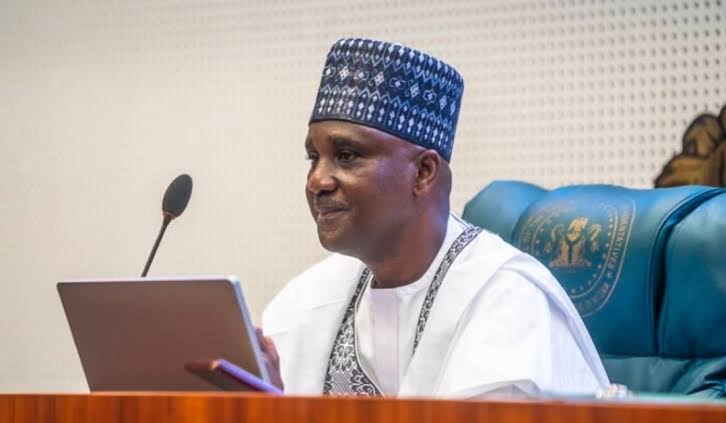
Rep. Abbas Tajudeen, the Speaker of the House of Representatives, has defended the proposed State Police Bill, assuring Nigerians that adequate constitutional safeguards have been included to prevent governors and political actors from using state police as private security outfits.
Abbas spoke on the issue yesterday at the National Security Roundtable held as part of activities marking the 2026 National Assembly Open Week in Abuja.
The Speaker acknowledged concerns that state police could be abused by governors or political leaders but said the proposed legislation was deliberately structured to prevent such occurrences.
“I understand the concern that many people bring to this discussion, and it is a reasonable one. It is the fear that a State Police could become the private army of a governor or a political godfather,” Abbas said.
“The people who drafted this Bill had the same fear, and they answered it.”
He explained that under the proposed constitutional amendment, governors would not have exclusive powers to appoint or remove state Commissioners of Police.
According to him, appointments would be made based on the recommendation of the National Police Council and subject to confirmation by the State House of Assembly, while removal would require the support of two-thirds of lawmakers and must be based on proven misconduct.
Abbas also said the proposed legislation empowers the Federal Police to intervene where a state police service becomes compromised, but only under clearly defined constitutional conditions.
“If a State Police breaks down, or falls into the wrong hands, or turns against the very people it should protect, the Constitution allows the Federal Police to step in… only in defined situations, only in writing, only for a limited period, with notice to the Governor and to the National Assembly within forty-eight hours, and always subject to the courts,” he said.
The Speaker said President Bola Tinubu had taken a historic step by transmitting an Executive Bill on state police to the National Assembly after decades of debate without decisive action.
“For the first time in our history, a sitting President has made State Police a central part of national reform,” Abbas said.
He argued that Nigeria’s centralised policing system was no longer sufficient to address emerging security challenges such as banditry, kidnapping, farmer-herder clashes and attacks on schools.
“A country as large and as varied as ours cannot be policed forever by one central Force run from the capital,” he said, stressing the need for security officers who understand local communities.
Abbas explained that the proposed amendment would change the name of the Nigeria Police Force to the Federal Police Service while allowing states that meet constitutional requirements to establish their own police services.
He noted that no state police service would begin operations until the State House of Assembly enacted enabling legislation and the state met operational standards set by the National Assembly.
Under the proposal, he said, the Federal Police Service would retain responsibility for terrorism, border security, federal offences and policing of the Federal Capital Territory, while state police would focus on maintaining law and order within their jurisdictions.
He added that state police services would be supervised by independent State Police Service Commissions, receive direct funding and operate under strict restrictions against the use of police powers for political, ethnic or religious purposes.
Citing examples from countries including Germany, Canada, India and the United States, Abbas said successful federal policing systems depend on national standards, intelligence sharing and strong accountability mechanisms.
Despite backing the proposal, the Speaker said lawmakers would carefully review issues such as funding, operational standards, intelligence coordination and the integration of existing vigilante and community security groups before passing the legislation.
He advocated a phased implementation model, beginning with the enactment of a National Minimum Standards Act before any state establishes its own police service.
“The National Minimum Standards Act must come before the first State Police issues a single directive: standards first, structures after,” he said.
Abbas also called for a sustainable funding framework to prevent state police institutions from becoming ineffective due to inadequate resources.
Beyond state police, he said Nigeria’s security reforms must include improved intelligence sharing, a national criminal and biometric database, stronger border security, better use of technology and improved welfare for security personnel.
Other stakeholders at the roundtable also canvassed security reforms.
The House Leader, Prof. Julius Ihonvbere, advocated constitutional roles for traditional rulers and greater involvement of community-based organisations in intelligence gathering.
Former Chief of Defence Staff, Gen. Lucky Irabor (retd.), urged Nigeria to prioritise intelligence-led security operations, institutional cooperation and responsible use of technology.
Kaduna State Governor Uba Sani called for stronger intelligence-driven policing, joint security operations and increased use of artificial intelligence, biometric systems and forensic technology in crime prevention.
The Etsu Nupe and Chairman of the Niger State Council of Traditional Rulers, Brig.-Gen. Yahaya Abubakar (retd.), endorsed the proposed state police, describing it as necessary for improving community security.
The United Kingdom’s Head of Development Cooperation, Ms Cynthia Rowe, also welcomed the consultation process, saying broader engagement with civil society would strengthen democratic governance and public confidence in the reform.
Despite backing the proposal, the Speaker said lawmakers would carefully review issues such as funding, operational standards, intelligence coordination and the integration of existing vigilante and community security groups before passing the legislation.
He advocated a phased implementation model, beginning with the enactment of a National Minimum Standards Act before any state establishes its own police service.
“The National Minimum Standards Act must come before the first State Police issues a single directive: standards first, structures after,” he said.
Abbas also called for a sustainable funding framework to prevent state police institutions from becoming ineffective due to inadequate resources.
Author Profile

Latest entries
 FeaturesNovember 20, 2026For The Records: DELIVERING TODAY, ENERGIZING TOMORROW
 Metro/CrimeNovember 20, 2026Crisis: Fountain of Life Church announces Sunday service, denies being sealed
 NewsNovember 20, 2026‘Tinubu may win only two states in 2027’
 NewsNovember 20, 2026INEC under attack for refusing to register AAP

For The Records: DELIVERING TODAY, ENERGIZING TOMORROW

Crisis: Fountain of Life Church announces Sunday service, denies being sealed

‘Tinubu may win only two states in 2027’

APC dismisses Ikonne’s claim to Abia South Senatorial ticket

Governor Fubara hosts Adventist World Church President, pledges support for proposed South-south Union Conference

APC final list: Govs, heavyweight senators, others axed out
-
 News6 months ago
APC dismisses Ikonne’s claim to Abia South Senatorial ticket
-
 Events5 months ago
Governor Fubara hosts Adventist World Church President, pledges support for proposed South-south Union Conference
-
 Features5 months ago
APC final list: Govs, heavyweight senators, others axed out
-

 Events5 months ago
Tears, tributes as Abia government, Nollywood bid farewell to Alex Ekubo
-

 Metro/Crime6 months ago
Nigeria’s bleeding, declare nat’l security emergency – Northern elders tell Tinubu
-
 News5 months ago
2027 election: Court nullifies NDC registration
-

 Metro/Crime5 months ago
NYSC blacklists 3 LGAs Kebbi, to relocate orientation camp
-

 News1 month ago
Abia Governor, Otti flags off Abia Tertiary Education Sports Fiesta with Lighting of Torch of Unity