
News
INEC refuses military deployments for elections
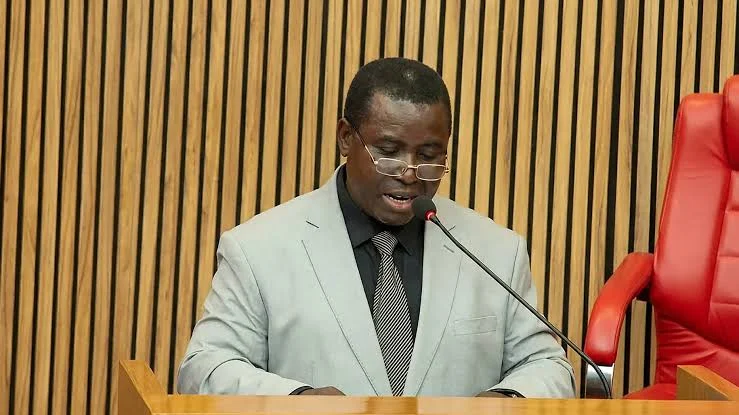
The Independent National Electoral Commission (INEC) has reassured that the deployment of the Armed Forces during elections should remain an exceptional measure, adding that the Nigeria Police Force is the constitutionally designated lead agency for election security under the Inter-Agency Consultative Committee on Election Security (ICCES).
Prof. Joash Amupitan, INEC Chairman, stated this while delivering a keynote address at a seminar organised by the Army War College Nigeria in Abuja. The seminar focused on election security, civil-military relations and the legal framework guiding the conduct of democratic elections in Nigeria.
Represented by the Commission’s Director of Legal Services, Al-Hassan Umar, Amupitan commended the Armed Forces for their patriotism and commitment to protecting Nigeria’s territorial integrity, but maintained that their role during elections should be supportive, protective and strictly within constitutional limits.
“As both a teacher and practitioner of law, permit me to begin by reaffirming the constitutional framework governing election security in Nigeria,” he said.
“The Constitution of the Federal Republic of Nigeria clearly delineates the responsibilities of institutions involved in the electoral process. INEC is constitutionally mandated to organise, undertake and supervise elections, while the Nigeria Police Force remains the lead agency for election security under the framework of the Inter-Agency Consultative Committee on Election Security.”
According to him, military involvement in election security is not intended to be routine but is only justified where prevailing security conditions require military assistance to civil authorities.
“The role of the Armed Forces is exceptional rather than routine. Their deployment arises only where prevailing security conditions require military support in aid of the civil authorities and strictly in accordance with the Constitution and other applicable laws.
“Accordingly, the Armed Forces perform a supportive rather than supervisory role, protective rather than political, and one firmly anchored in constitutional responsibility.”
Amupitan reaffirmed INEC’s commitment to conducting elections that are transparent, inclusive, technologically driven, professionally administered and fully compliant with the Constitution and the Electoral Act.
He said the Commission would continue to prioritise inclusivity by making adequate provisions for persons with disabilities, the elderly, pregnant women and other vulnerable groups.
“In this regard, we look forward to the continued support of the Armed Forces and other security agencies in ensuring that election-day security is discharged with professionalism, restraint and respect for the dignity and fundamental rights of every citizen.
“Security personnel must inspire confidence, protect voters, safeguard election officials and preserve the integrity of the electoral process.
“Our shared objective is not merely the conduct of peaceful elections, but elections in which every Nigerian can freely exercise the constitutional right to vote without fear, intimidation or unlawful interference.”
Also speaking, the Chief of Defence Staff (CDS), General Olufemi Oluyede, charged members of the Armed Forces to maintain strict neutrality, professionalism and adherence to international human rights standards in the discharge of election-related duties.
Represented by Rear Admiral Abolade Ogunleye, the CDS said the success of Operation SAFE CONDUCT 2027 would not only be measured by the absence of violence or disruption but also by respect for the rule of law and human rights.
The seminar, titled “The Role of the Armed Forces of Nigeria in Conducting Free, Fair and Credible Elections: Nigeria’s 2027 General Elections in Perspective,” was attended by field commanders and staff officers from the Armed Forces, the Nigeria Police Force, other security agencies and INEC.
Oluyede noted that previous elections had tested the Armed Forces’ operational readiness, inter-agency coordination and civil-military relations through the activities of unscrupulous elements, but said the military had consistently demonstrated professionalism and commitment to protecting Nigeria’s democracy.
“I expect that the lessons from these elections will be applied to strengthen inter-agency cooperation, enhance rapid response capabilities and ensure the protection of law-abiding citizens while maintaining political neutrality.”
He described the seminar as timely and critical to reinforcing the Armed Forces’ commitment to impartiality, neutrality and respect for human rights.
“I must state unequivocally that the success of Operation SAFE CONDUCT 2027 will not only be measured by the absence of violence or disruption of the electoral process but also by adherence to basic democratic principles and respect for human rights.
“I therefore urge commanders, staff officers and all participants to leave this seminar equipped with the knowledge and skills required to operate effectively in a rapidly changing and high-threat environment in the interest of national stability.”
Author Profile

Latest entries
 FeaturesNovember 20, 2026For The Records: DELIVERING TODAY, ENERGIZING TOMORROW
 Metro/CrimeNovember 20, 2026Crisis: Fountain of Life Church announces Sunday service, denies being sealed
 NewsNovember 20, 2026‘Tinubu may win only two states in 2027’
 NewsNovember 20, 2026INEC under attack for refusing to register AAP









For The Records: DELIVERING TODAY, ENERGIZING TOMORROW

Crisis: Fountain of Life Church announces Sunday service, denies being sealed

‘Tinubu may win only two states in 2027’

APC dismisses Ikonne’s claim to Abia South Senatorial ticket

Governor Fubara hosts Adventist World Church President, pledges support for proposed South-south Union Conference

APC final list: Govs, heavyweight senators, others axed out
-
 News6 months ago
APC dismisses Ikonne’s claim to Abia South Senatorial ticket
-
 Events5 months ago
Governor Fubara hosts Adventist World Church President, pledges support for proposed South-south Union Conference
-
 Features5 months ago
APC final list: Govs, heavyweight senators, others axed out
-

 Events5 months ago
Tears, tributes as Abia government, Nollywood bid farewell to Alex Ekubo
-
 Metro/Crime6 months ago
Nigeria’s bleeding, declare nat’l security emergency – Northern elders tell Tinubu
-
 News5 months ago
2027 election: Court nullifies NDC registration
-
 Metro/Crime5 months ago
NYSC blacklists 3 LGAs Kebbi, to relocate orientation camp
-
 News1 month ago
Abia Governor, Otti flags off Abia Tertiary Education Sports Fiesta with Lighting of Torch of Unity