
News
APC ignores agitations, considers govs’ lists, secretly distributes INEC nomination forms to ‘authentic candidates’
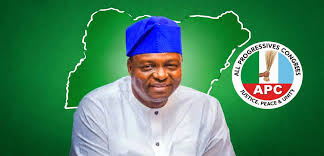
The All Progressives Congress (APC) has settled the question of who its authentic candidates are for the 2027 governorship, Senate, House of Representatives and House of Assembly elections, even as the party publicly insists no such list exists.
Sources within the party told journalists that the National Working Committee (NWC) has approved a comprehensive list of candidates across the states, and that State Working Committees (SWCs) have since begun issuing INEC nomination forms exclusively to those cleared by the national leadership.
The development comes weeks after the party’s primaries were marred by widespread crises, with parallel congresses and rival candidates emerging in several states, leaving the question of legitimate flag bearers unresolved in the public eye.
Party insiders told Daily Sun that the APC has chosen to keep the resolution of the disputes away from public view, fearing a backlash from aggrieved aspirants and their supporters should the leadership be seen to be openly dictating outcomes.
Officially, the party has repeatedly dismissed reports of an approved candidates list as fake. Behind the scenes, however, chairmen, deputy chairmen and secretaries of state working committees have been quietly handing out Independent National Electoral Commission (INEC) nomination forms strictly to candidates who enjoy the backing of the national leadership, a clear signal of where authority over the process truly lies.
Daily Sun gathered that the secret distribution of forms did not happen in isolation, but was preceded, about three weeks ago, by the training of select party staff who are expected to work alongside INEC officials to upload the data and nomination forms of the candidates the party has approved directly onto the electoral commission’s server.
According to the source, this arrangement effectively pre-empts any formal report from the party’s Appeal committee, which was set up to receive feedback, updates and grievances from aspirants who claim to have been sidelined during the disputed primaries.
The source said that rather than make public the findings of the committee, the APC leadership has gone ahead to take sides with the governors, just as earlier reported, and has begun quietly issuing forms to the candidates it has approved.
The findings of the Appeal Committee, the source added, have never been made public, raising questions about whether the grievances submitted to it were ever genuinely considered before the party proceeded to settle on its preferred candidates.
Media aide to the national chairman of the APC, Abimbola Tooki, told Daily Sun that the Appeal Committee submitted its report to the NWC. He further revealed that the recommendations were studied and considered by the NWC and acted accordingly.
He, however, said the party decided not to make the recommendations of the Appeal Committee public, but instead settled for internal arrangements to settle the disputes.
“Yes, the Appeal Committee submitted its report. The NWC studied the recommendations and acted accordingly,” Tooki told Daily Sun
In all the 31 states controlled by the APC, candidates who enjoy the backing of their governors have received their INEC nomination forms from the state leaders of the party.
There is a clear difference between the two categories of forms at the centre of this process, and the confusion between them has fuelled much of the uncertainty among aspirants.
A party nomination form is an internal document issued by a political party to those seeking to contest its primary election. Purchasing and submitting this form is what qualifies an aspirant to participate in the primary, where party delegates vote to select the candidate who will fly the party’s flag in the general election.
An INEC nomination form, by contrast, is the document submitted to INEC once a party has concluded its primary and settled on its candidate. It is this latter form that formally notifies the electoral umpire of who the party’s standard bearer is for a given office, and it is only candidates whose names appear on it that INEC will recognise and place on the ballot.
In effect, the party nomination form determines who may contest internally, while the INEC nomination form determines who is finally presented to the nation as the party’s candidate.
That distinction is what makes the secret distribution of INEC forms significant. By controlling who receives these forms, and by positioning its own trained staff to work directly with INEC officials on uploading candidate data, the NWC is, in practice, deciding the outcome of disputes that were never fully resolved through open primaries, without having to make that decision publicly or account for the work of its own post primaries committee.
Daily Sun gathered that more than 98 per cent of candidates who have so far collected INEC nomination forms from SWCs are those endorsed by APC governors in their respective states.
In states without an APC governor, the candidates being handed forms are said to be those endorsed by the highest ranking APC public office holder at the federal level from that state, underscoring the extent to which the process remains tightly controlled by a narrow circle of party power brokers rather than being thrown open to genuine contest.
Aspirants who lost out in the disputed primaries are said to be watching the development with dismay, with some privately accusing the national leadership of using the form distribution exercise, and the quiet deployment of its own staff into the INEC upload process, to formalise outcomes they consider to have been imposed rather than democratically decided.
The party’s national leadership is yet to respond directly to these allegations, maintaining its public position that talk of an approved candidates list remains unfounded.
With the 2027 general election drawing closer and INEC’s timetable for the submission of nomination forms already in motion, the APC’s handling of its internal disputes is likely to come under increasing scrutiny, particularly from aggrieved aspirants who may yet turn to the courts, much as their counterparts in opposition parties have done, to challenge what they see as a process conducted away from public glare.
Dailysun
Author Profile

Latest entries
 NewsSeptember 23, 2026Court stops INEC from accepting NDC candidate for Imo East
 NewsSeptember 23, 2026Funding Ibadan Airport Upgrade: Makinde refutes Wike’s ₦50bn claim
 NewsSeptember 22, 2026Shettima Tells Africa: Stop Exporting Raw Minerals, Build Industries
 NewsSeptember 21, 2026Ex-Kogi gov candidate mourns Ibrahim Idris






Court stops INEC from accepting NDC candidate for Imo East

Funding Ibadan Airport Upgrade: Makinde refutes Wike’s ₦50bn claim

Shettima Tells Africa: Stop Exporting Raw Minerals, Build Industries

APC dismisses Ikonne’s claim to Abia South Senatorial ticket

Governor Fubara hosts Adventist World Church President, pledges support for proposed South-south Union Conference

APC final list: Govs, heavyweight senators, others axed out
-
 News4 months ago
APC dismisses Ikonne’s claim to Abia South Senatorial ticket
-
 Events3 months ago
Governor Fubara hosts Adventist World Church President, pledges support for proposed South-south Union Conference
-
 Features3 months ago
APC final list: Govs, heavyweight senators, others axed out
-

 Metro/Crime4 months ago
Nigeria’s bleeding, declare nat’l security emergency – Northern elders tell Tinubu
-

 Events3 months ago
Tears, tributes as Abia government, Nollywood bid farewell to Alex Ekubo
-
 News3 months ago
2027 election: Court nullifies NDC registration
-

 Metro/Crime3 months ago
NYSC blacklists 3 LGAs Kebbi, to relocate orientation camp
-

 Metro/Crime4 months ago
Police begin crackdown against vehicles without number plates